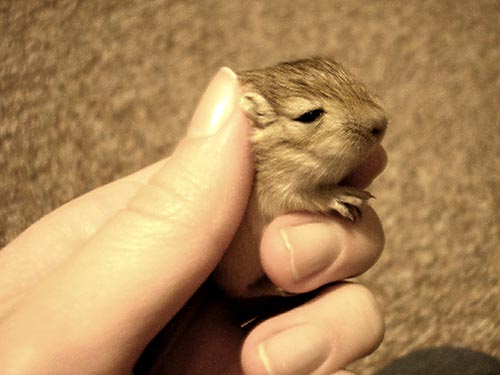
Behavior
Only same-sex pairs should be kept together
Sibling pairs are most convenient and easiest, or pairing two gerbils when young. I have found that an older gerbil,
especially males will accept a baby gerbil quite easily.
If the gerbils are older, a split cage will be needed. Some adult gerbils refuse to live peaceably with another, but
normally gerbils enjoy each others company, grooming each other and sleeping together. I don't agree that they need to have
a companion. Mine have been just fine in pairs, groups, or singles (after mate dies).
Note: gerbils are highly territorial and will fight viciously if they don't get along. Don't risk the injuries they inflict
by placing them together before they are ready to "see" if they get along. NEVER introduce a lone gerbil to an
already established group. If two gerbils are apart from each other for a length of time you will find that they forget
each other and will need to be split-caged.
I've
had a trio of males live peaceably together, but I recommend females only in pairs as they tend to be more aggressive
of the sexes. I have had a trio of females, mother and daughters. Then never fought but could be grumpy with each
other at times.
There are exceptions to every rule, but erring on the site of caution is always best to avoid injuries.
Feeding
Water should be available at all times in a water bottle. Check the bottle often to make sure it is working properly.
Food should be given daily or every other day. Find a food with a variety of ingredients, not just mostly sunflower
seeds. You can mix different bags together or mix your own blend. For a variety in their diet, fresh fruits, vegetable,
dry cereal low in sugar like cornflakes or oats, timothy hay, uncooked noodles, etc. can be given.
Be sure to make sure it is safe for gerbil ingestion and don’t overdo it on any one item, especially greens. Dry
cat or dog food also help keep their teeth worn down.
Activity Needs
Gerbils are VERY active rodents.
Gerbils are nocturnal, meaning they are asleep during the day and up at night. They are up for short spurts during
daylight hours but once evening comes, the activity starts.
Give them things to chew on like toilet paper rolls,
egg cartons, and paper towels as earlier stated. My gerbils like tissue boxes (with the plastic taken out), or empty
oatmeal tubes. Be prepared for a lot of noise! Stick with things with little ink or glue.
You may provide your gerbils with a wheel. There
are lots of opinions on what wheels are best and what wheels are most harmful. I have not had a problem with either. Note
that there is always a possibility of them breaking a leg or hurting their tail.
PVC tubing is great for tunnels. Be sure to clean
them weekly or bi weekly with warm water and soap.
Facts
Gerbils can live 3-4 years on average.
Gerbils are one of the easiest to care for rodents. They don't have strong urine smell like hamsters. They are
not prone to biting like hamsters seem to be.
Never lift a gerbil or pull it by its tail.
Your gerbil may go through stages as it matures into an adult where it becomes very active and prefers not to be handled.
Every gerbil is different in personality. Some enjoy being held, crawling over their humans and having that
interaction while others prefer to be left alone in their cages.
Be patient with hand-taming and don’t let a nip or two scare you off. Gerbils are not normally human-aggressive.
They are very curious and may just be “seeing” what you are with a nip or nibble.
Gerbils make great pets for anyone but can be too fast moving for very young children. They make wonderful
first pets for children with the manual dexterity to hold them.
Gerbils are curious about their surroundings, and soft to the touch. A healthy gerbil should have clear bright eyes,
non-greasy healthy coat, no discharge from their backside or eyes, and no external injuries or limps.
For
online help with your gerbils or just to chat, visit some of the links to groups I have posted on this website.
Good luck with your new friends)! Feel free to email me if you have questions.